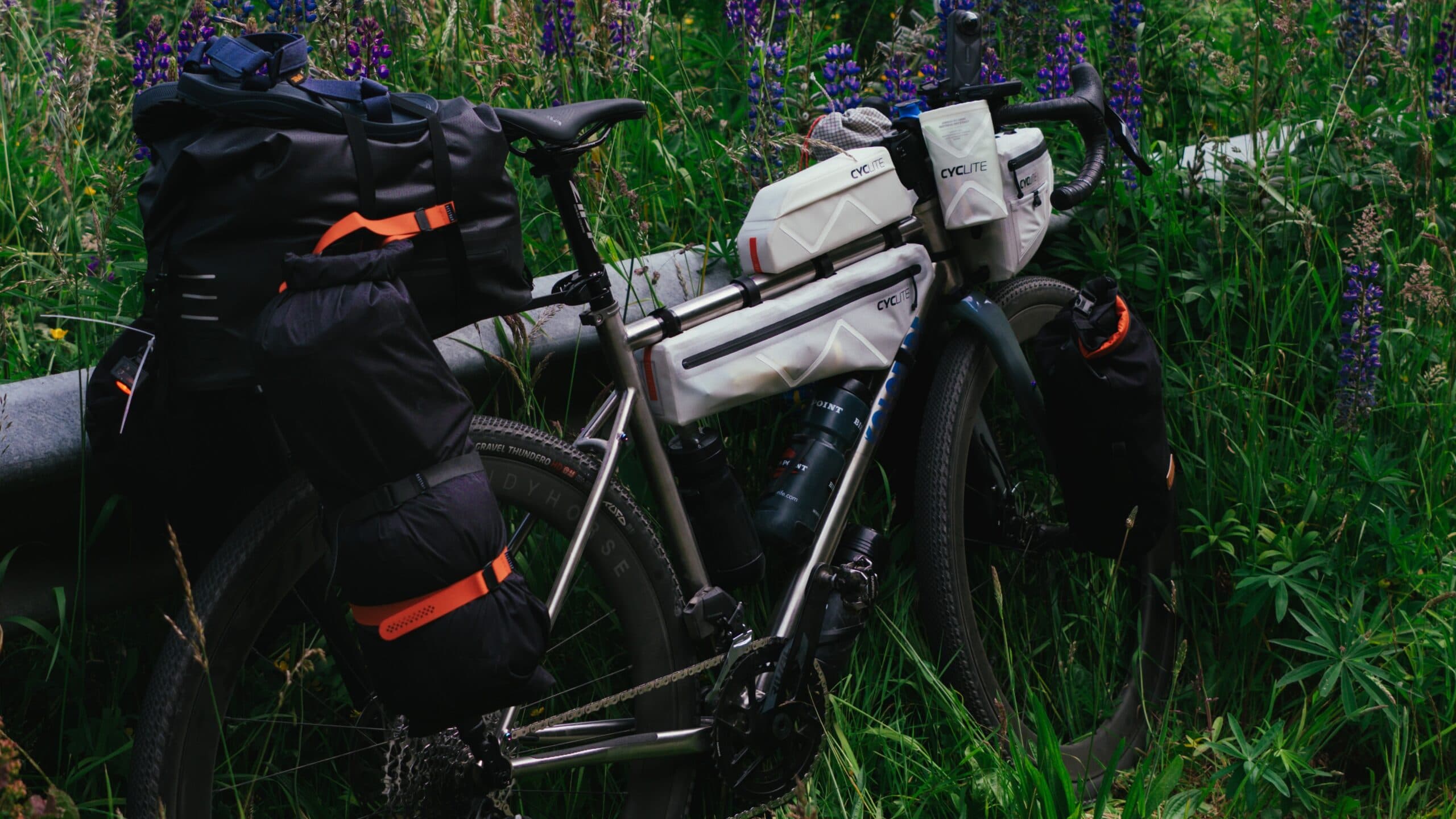
Not every route can be ridden "light". A longer trip, bikepacking, everyday commuting or shopping on the way – in such situations, a rear bike rack provides the greatest stability and control over the luggage.
This is a classic, but still one of the most functional solutions for transporting cargo – both on asphalt and on gravel.
Why is a rear rack a good choice?
A rack mounted above the rear wheel:
- allows you to transport larger and heavier loads,
- does not burden the back or shoulders,
- does not negatively affect the pedaling rhythm,
- ensures stability even with full panniers.
A properly mounted rack increases the functionality of a bike – gravel, touring or city bike – as long as the frame has appropriate mounting points.
Proven solutions
In the Koloride offer you will find, among others, ORTLIEB Rack Three QL3/QL3.1 – a solid rack mounted permanently to the frame. This is a solution for people who regularly ride with panniers and expect maximum stability both in training and during weekend trips.
An alternative is the ORTLIEB Quick Rack Alu – a rack that can be mounted or completely removed in about 15 seconds. This is a good solution for those who ride without a load every day and attach the rack only when needed.


Stability matters
Rear racks are designed to keep the weight as low and close to the bike's axle as possible. Thanks to this:
- the bike handles more confidently,
- lateral swaying under load is reduced,
- full panniers do not destabilize the ride in corners and on bumps.
This is especially important on longer routes and with a heavier load.
How is the rear rack mounted?
Depending on the bike's design and the rack model, two main mounting methods are used:
• Mounting to frame threads
A classic solution used in models such as ORTLIEB Rack Three QL3/QL3.1 and ORTLIEB Quick Rack Alu.
The rack is screwed to mounting points in the rear triangle of the frame, which ensures very high stability under higher loads.
• Mounting at the rear wheel axle
Used in modern systems such as Tailfin (pictured next to Nat Nykiel).
The rack rests on a special thru-axle and additional stabilizing points, thanks to which it can also be used in frames without classic threads.
In practice:
frame threads – best for constant, heavier loads,
axle system – greater flexibility and quick disassembly,
How to choose a rear bike rack?
Before purchasing, it is worth checking:
- compatibility with the frame – the presence of eyelets and mounting points (a standard in many Koloride models),
- load capacity and material – aluminum is a good compromise between weight and strength,
- mounting options – additional rails or levels facilitate the placement of panniers and accessories.
A good rack should suit not only the bike, but also the riding style – everyday city riding has different needs than a multi-day expedition. As always, consider your needs.
Assembly and practical use
Mounting a rear rack is usually quick and intuitive – it relies on existing mounting points and a few screws. Once mounted, the luggage remains stable, does not shift and does not interfere while riding.
It is worth remembering to periodically check the screws and the condition of the rack – this is a simple task that guarantees trouble-free use for many seasons.
Summary
Rear bike racks are one of the most versatile cargo transport solutions. They ensure stability, comfort and full control over the load – regardless of whether you're going shopping, training or on a longer trip.
If you want to increase the capabilities of your bike, a solid rear rack is a step that you will quickly appreciate in practice.
See you on the trail!