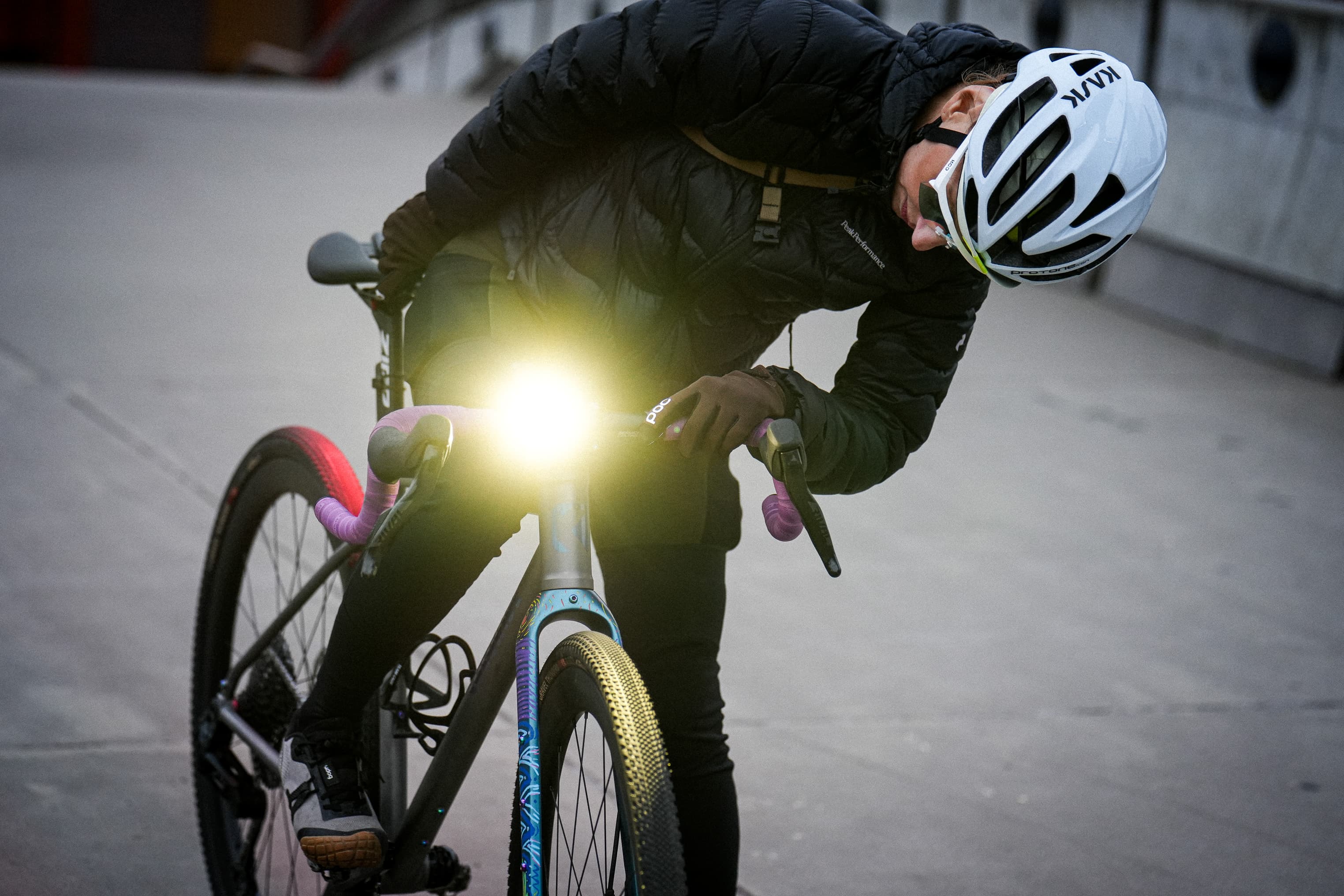
Bicycle lights are one of those pieces of equipment that most cyclists don’t start thinking about until they’re riding home after dark for the first time. In practice, however, good lighting comes in handy much more often—during an autumn training ride, a morning commute to work, an all-day trip that unexpectedly runs long, or a multi-day bikepacking adventure.
The problem is that there’s no single “perfect” bike light. You need different lighting for your daily commute, different lighting for evening training rides on gravel, and yet another type for an ultramarathon, where you’ll be riding for over a dozen hours after dark.
That’s why, before you start comparing lumen ratings, it’s worth asking yourself: where and when do you ride most often?


Don't just look at the lumens
In the world of cycling, it’s very easy to get caught up in the numbers. Manufacturers compete to tout the brightness of their lights: 500, 1,000, 1,500, or even 2,000 lumens.
However, the lumen count alone doesn’t tell the whole story.
Equally important are the quality of the optics, light distribution, runtime, weather resistance, the ability to charge while riding, and ease of use. A well-designed light with 500–800 lumens often lets you see more than a much more powerful model with a poorly designed reflector.
It’s also worth remembering that front and rear lights serve completely different purposes. The front light is meant to help you see the road. The rear light is meant to make sure others can see you. This difference may seem obvious, but it’s a good place to start when choosing your lighting.
Lights for Daytime Riding
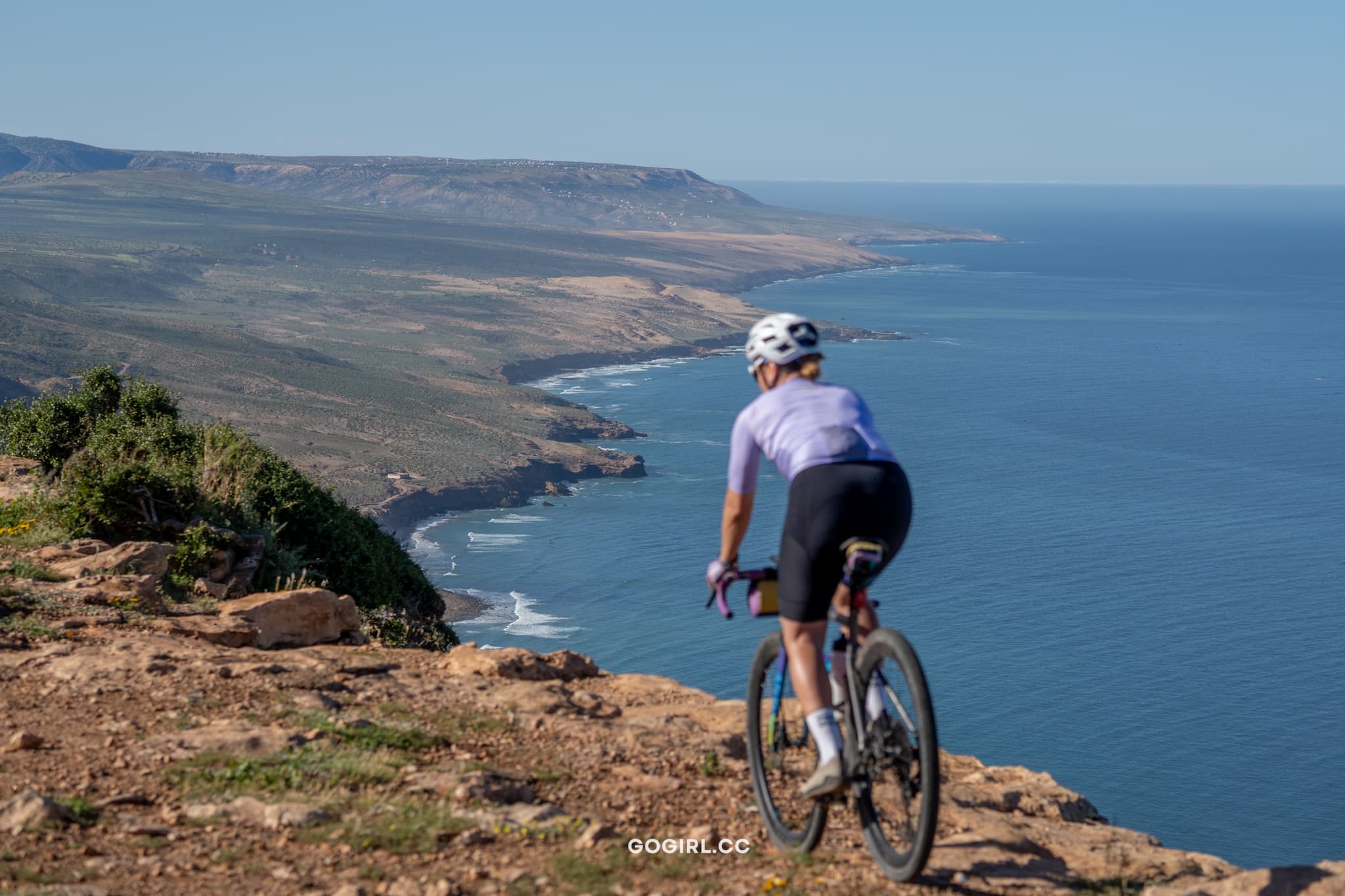
More and more cyclists are using lights even when riding in direct sunlight. And this isn’t about illuminating the road.
Daytime lights are designed to improve the cyclist’s visibility—especially on public roads, among shadows cast by trees, when riding into the sun, or in changing weather conditions.
A highly visible rear light often gives drivers a few extra seconds to notice the cyclist and react.
In this category, it’s worth checking out products from brands such as Moon, Garmin, and Cateye. Moon lights, in particular, have been receiving excellent reviews for years for their visibility, battery life, and reasonable value for the price.
If you ride mostly on public roads, using a rear light even during the day is one of the simplest ways to improve your safety.

A light for the city and everyday riding
In the city, you don’t need to light up the forest a hundred meters ahead of you.
What matters most is good visibility, ease of use, easy charging, and reasonable battery life. In most cases, a front light with about 300–500 lumens and a good taillight will be more than enough.
Lights equipped with a cut-off feature are also becoming an increasingly interesting category. They work similarly to a car’s low beams, illuminating the road without blinding oncoming traffic.
This feature will be especially appreciated by people who also use their bikes as a means of daily transportation.
Lights for gravel and dirt riding
Here, the requirements start to increase.
On paved roads, you have road signs, lane markings, and often streetlights to guide you. On forest gravel paths or dirt roads, you’re completely reliant on your own light.
For most gravel riders, a light offering around 500–1,000 lumens will be the optimal choice. However, it’s not just about power. Equally important is wide and even illumination of the road and the shoulders.
In practice, models from brands such as Ravemen, Lezyne, Sigma, Magicshine, and Mactronic work well. Regardless of the manufacturer, it’s worth paying attention primarily to the quality of the light beam, battery life, and mounting method.
If you often ride after dark, you should consider lights equipped with low-beam and high-beam modes. These allow you to see the route clearly without blinding other road or trail users.
The most common mistake? A poorly positioned light
This is a topic that definitely doesn’t get enough attention. Janek from the Rowerowy Sztos channel has repeatedly pointed out a problem that practically every cyclist is familiar with. Many cyclists spend several hundred zlotys on good lighting, only to mount the light so high that it shines directly into the eyes of oncoming traffic.
However, even the best light won’t work properly if it’s misaligned. The beam should illuminate the road ahead of the bike, not the treetops or the faces of other road users. It’s worth taking a few minutes to adjust it properly, as this often improves riding comfort more than buying a more powerful model.
This is also a good time to look into lights with a cut-off feature. More and more manufacturers are offering models that work similarly to a car’s low beams and significantly improve comfort for all road users.
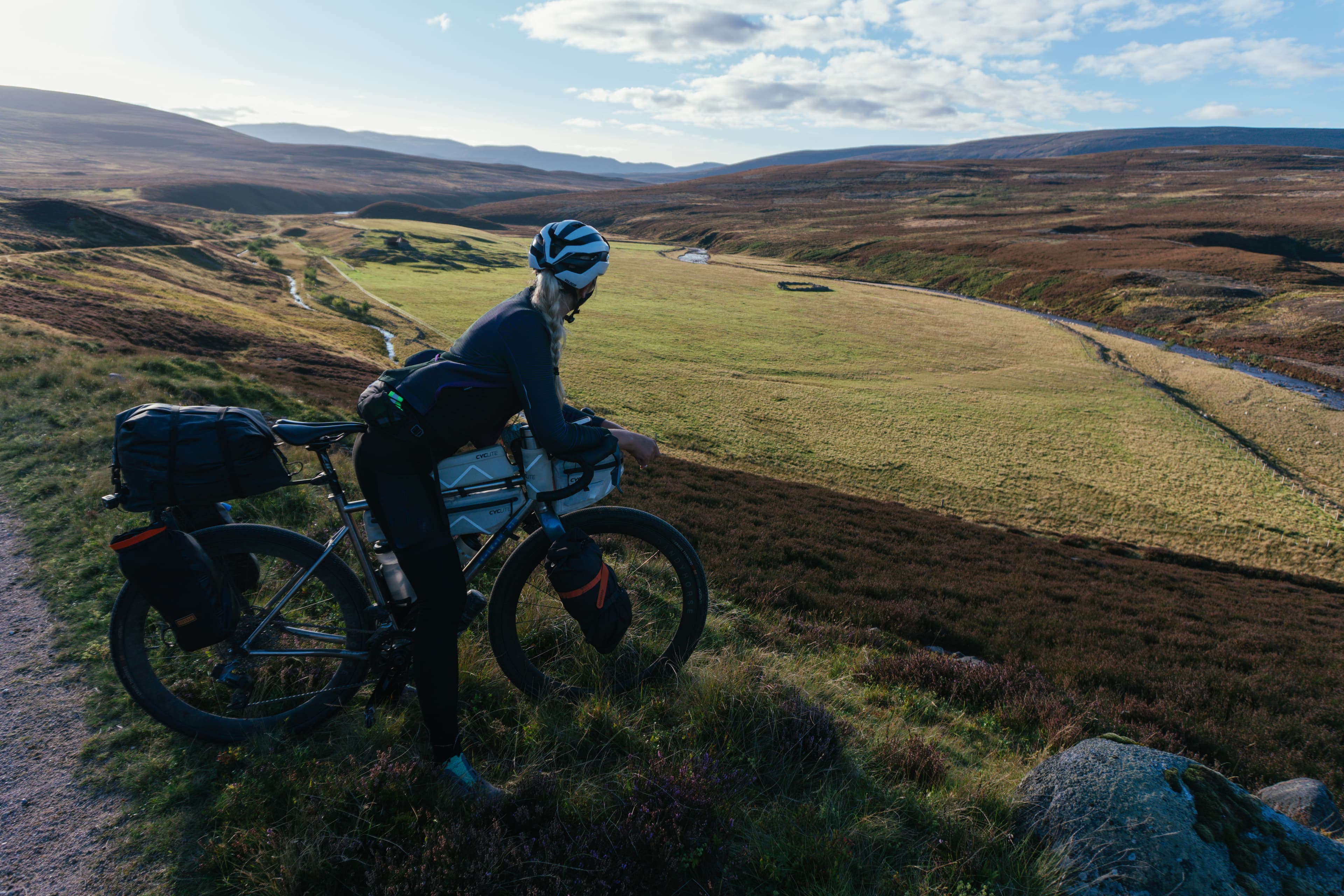
Lights for Bikepacking and Ultra Cycling
In the world of ultra-cycling, the number of lumens is no longer the most important factor.
Reliability, runtime, and the ability to power the light for many hours without having to find an outlet are far more important.
When riding through the night, it’s more important that the light will still be working after ten hours than whether it offers 1,200 or 1,600 lumens.
That’s why many ultramarathon participants choose models that allow for battery replacement or charging from a power bank while riding.
In this segment, brands worth noting include Fenix, Lupine, Mactronic, and the increasingly popular Prox Columba, which combines a light cutoff feature with the ability to quickly swap out the battery.


The Dynamo Is Making a Comeback
Just a dozen or so years ago, the term “dynamo” was associated with a heavy generator rubbing against a tire.
Today, things look completely different.
Modern hub-mounted dynamos can power not only lights but also USB chargers, GPS devices, and phones. For those traveling for many days without access to infrastructure, this can be one of the most practical solutions.
SON and Supernova have long been among the most highly regarded manufacturers of dynamo-powered lighting systems. Their products can be found on both expedition bikes and advanced bikepacking setups designed for journeys lasting several weeks.
How does this work for us?
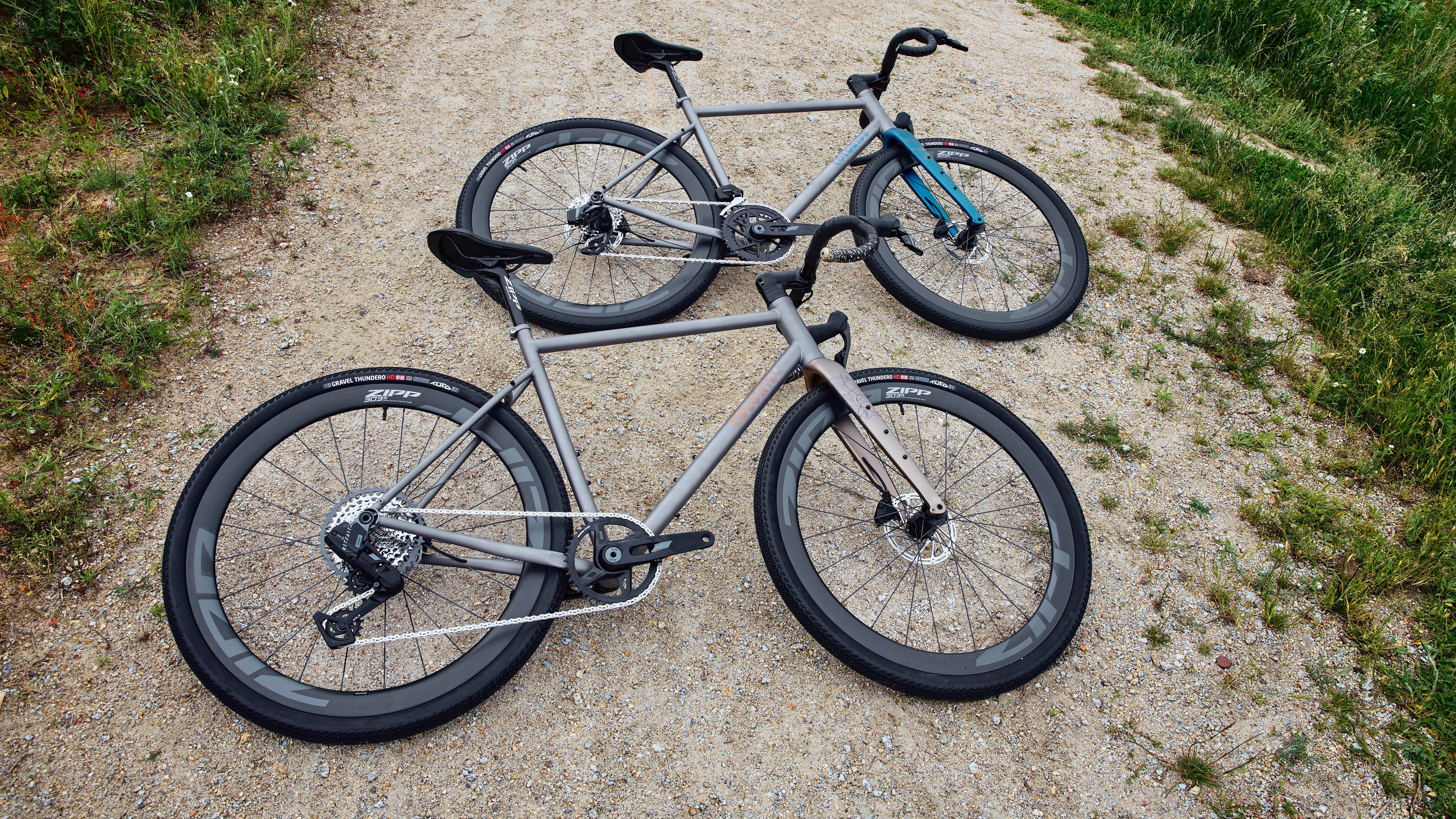
At Koloride, we talk a lot about frames, geometry, drivetrains, and wheels, but the topic of lighting regularly comes up during our own trips. Not because we’re lighting specialists, but simply because we ride a lot.
If there’s one thing we all agree on, it’s the taillight. We use it practically all the time, regardless of the weather or time of day. On public roads, good visibility can make a huge difference, and over the years we’ve heard far too many stories of cyclists whose rides ended badly. That’s why the taillight is a bit like a helmet to us—we don’t even think twice about bringing it along. It’s simply part of our bike’s gear.
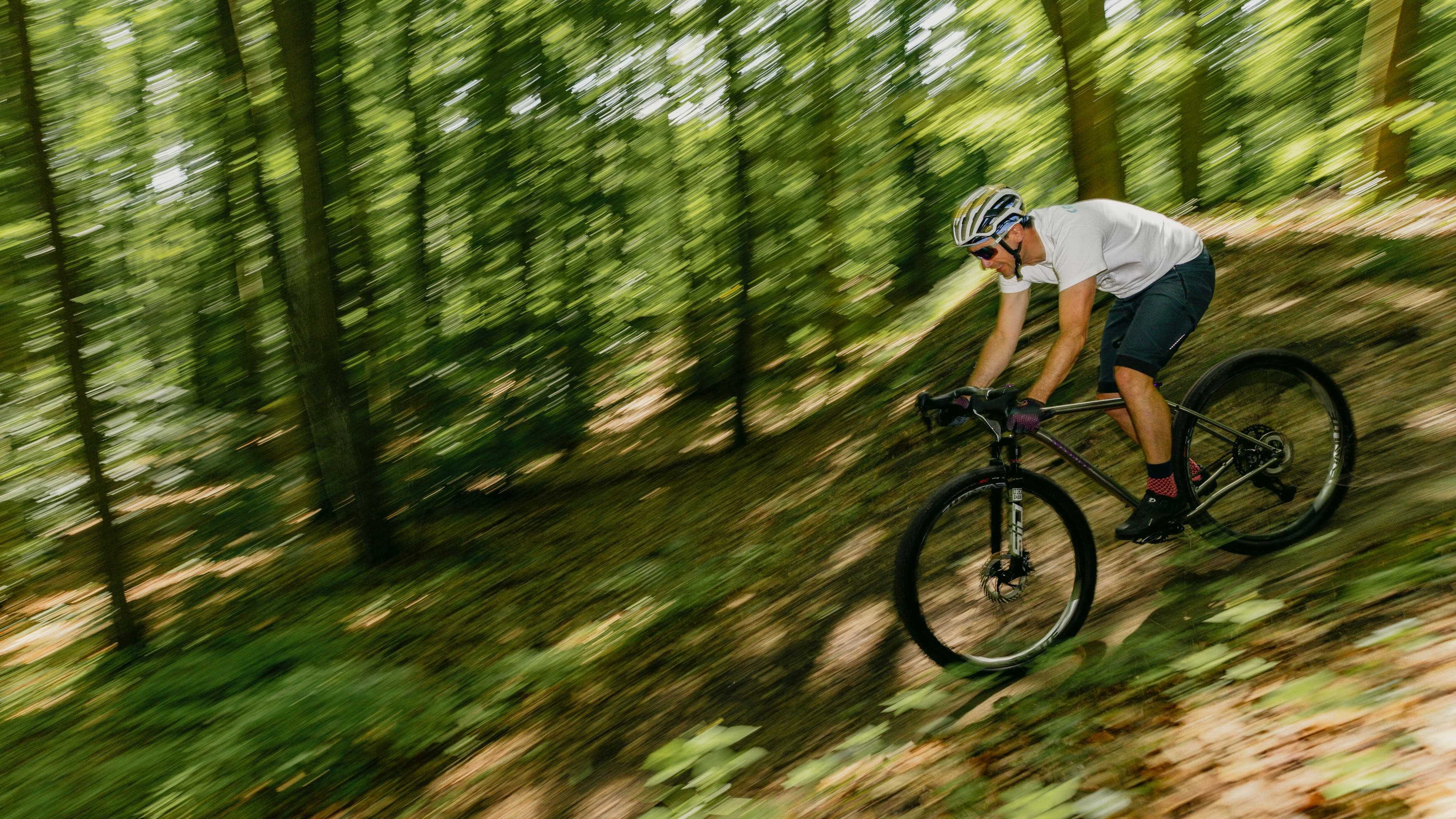
The front light really proves its worth especially when the paved road and streetlights end. In the Wielkopolski National Park, many of our evening rides take us along forest roads and gravel paths. That’s where it’s easiest to notice the difference between a light that boasts a high lumen count on the packaging and one that actually illuminates the path well and lets you ride confidently after dark.
It’s a different story altogether during bikepacking or long-distance rides. After a few hours of riding, it quickly becomes clear that runtime, reliability, and the ability to recharge the light from a power bank are more important than maximum brightness. On the trail, there isn’t always a place to plug in a charger, which is why solutions that have proven themselves during hours-long rides often turn out to be more practical than the most powerful models available on the market.
When choosing lighting, Sebastian also often checks out Janek’s content from the Rowerowy Sztos channel. We find his practical tests particularly valuable, as well as his attention to details that are easy to overlook when shopping—such as proper light alignment, actual runtime, and ease of use during long rides.

Summary
You don’t have to buy the most expensive light on the market right away. Instead, it’s worth taking a moment to choose lighting that suits your riding style.
A bike used mainly for commuting to work will have different needs than a gravel bike taken out for evening training rides on gravel roads, and yet another set of needs for a bike prepared for multi-day bikepacking or ultra rides.
A well-chosen light simply does its job.