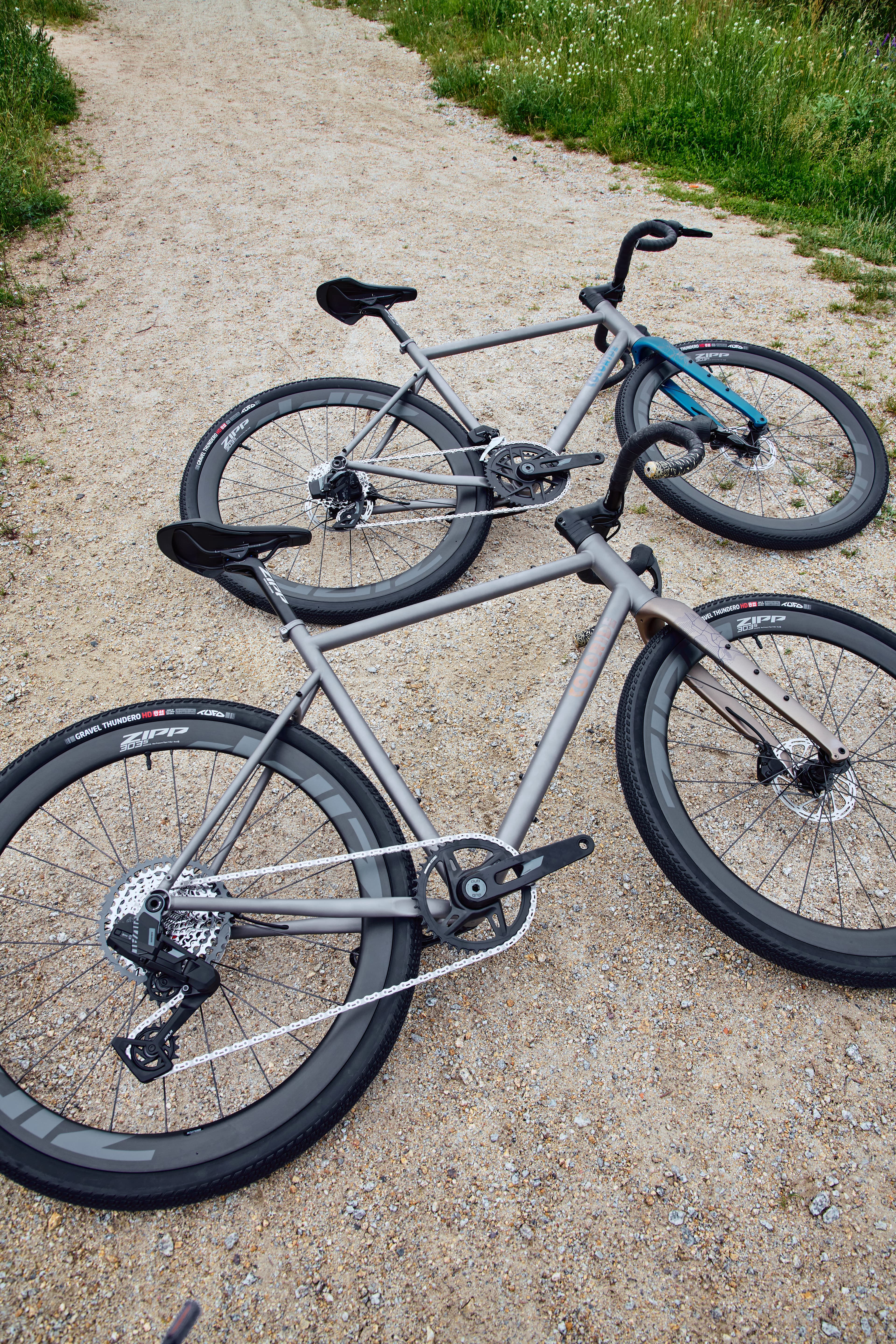
1x drivetrain – simplicity that really makes sense
Just a dozen or so years ago, 3x8, 3x9, and 3x10 drivetrains were the standard. Later, the number of chainrings up front began to decrease, while the range of cassettes increased. Today, a 1x12 or 1x13 drivetrain can offer a wider range than the old systems with two or three chainrings.
Depending on the system, modern 1x gravel drivetrains offer a range of approximately 450–520%. On top of that, we can change the size of the front chainring and thus shift the entire range toward faster riding on flat terrain or lighter gear ratios needed in the mountains.
Then there’s simplicity. There’s no front derailleur or second chainring; shifting is intuitive, and when riding off-road, we simply choose a lighter or heavier gear. There’s no need to wonder which chainring we’re on. The tougher the terrain, the more I appreciate this simplicity.
What does a well-chosen 1x drivetrain look like?
There’s no single configuration I’d recommend to everyone. We choose the chainring and cassette sizes based on the specific use case.
For example, a 40T chainring with a 10–44 cassette is a very versatile setup for flat and undulating terrain. A 42T with a 10–46 cassette still works well on faster sections but offers more reserve when the terrain gets hillier. On the other hand, a 40T chainring with a 10–52 cassette is a setup I’d definitely prefer for mountain bikepacking and riding with luggage.
And that’s exactly why the statement “1x doesn’t have enough gears” doesn’t really tell the whole story.
Range and gear spacing are two different things
This is probably the most important thing to understand when choosing between 1x and 2x.
Range tells us how big the difference is between the lightest and heaviest available gear ratios. Step size, on the other hand, tells us how large the jumps are between consecutive gears.
A modern 1x drivetrain—especially when using a large MTB cassette—can have a wider range than a standard 2x drivetrain. So the problem isn’t a lack of a light or heavy gear. The trade-off is larger jumps between gears.
Off-road, this isn’t usually a problem for me. The situation is completely different when riding fast on pavement. When you want to maintain a specific cadence, sometimes one gear is a little too light, and the next one is a little too heavy.
And this is where the 2x setup really shines.


When would I choose 2x?
Without much thought, I’d choose 2x if asphalt is where you’ll be riding most of the time. Especially if you plan on regular training sessions, fast riding, long stretches on good pavement, or riding in a group.
Two chainrings allow for a more tightly spaced cassette, making it easier to select exactly the gear ratio you need at any given moment. For someone who trains and monitors their cadence, this isn’t just a minor detail—you can really feel the difference while riding.
That’s why 2x drivetrains are naturally more common on our road-oriented all-road bikes, such as the RANGE or SHIFT. Not because “more chainrings are better,” but because it suits the character of these bikes.
Sometimes, however, a customer wants a 2x setup simply because they consider two chainrings to be more versatile. After talking with them, it turns out that most of their routes take them on gravel, through forests, and on off-road trails; they don’t race on asphalt and don’t strictly monitor their cadence. In that case, a well-chosen 1x setup might simply be the more sensible solution.
1x or 2x for bikepacking?
Here, I strongly disagree with the rule: “lots of luggage = 2x.”
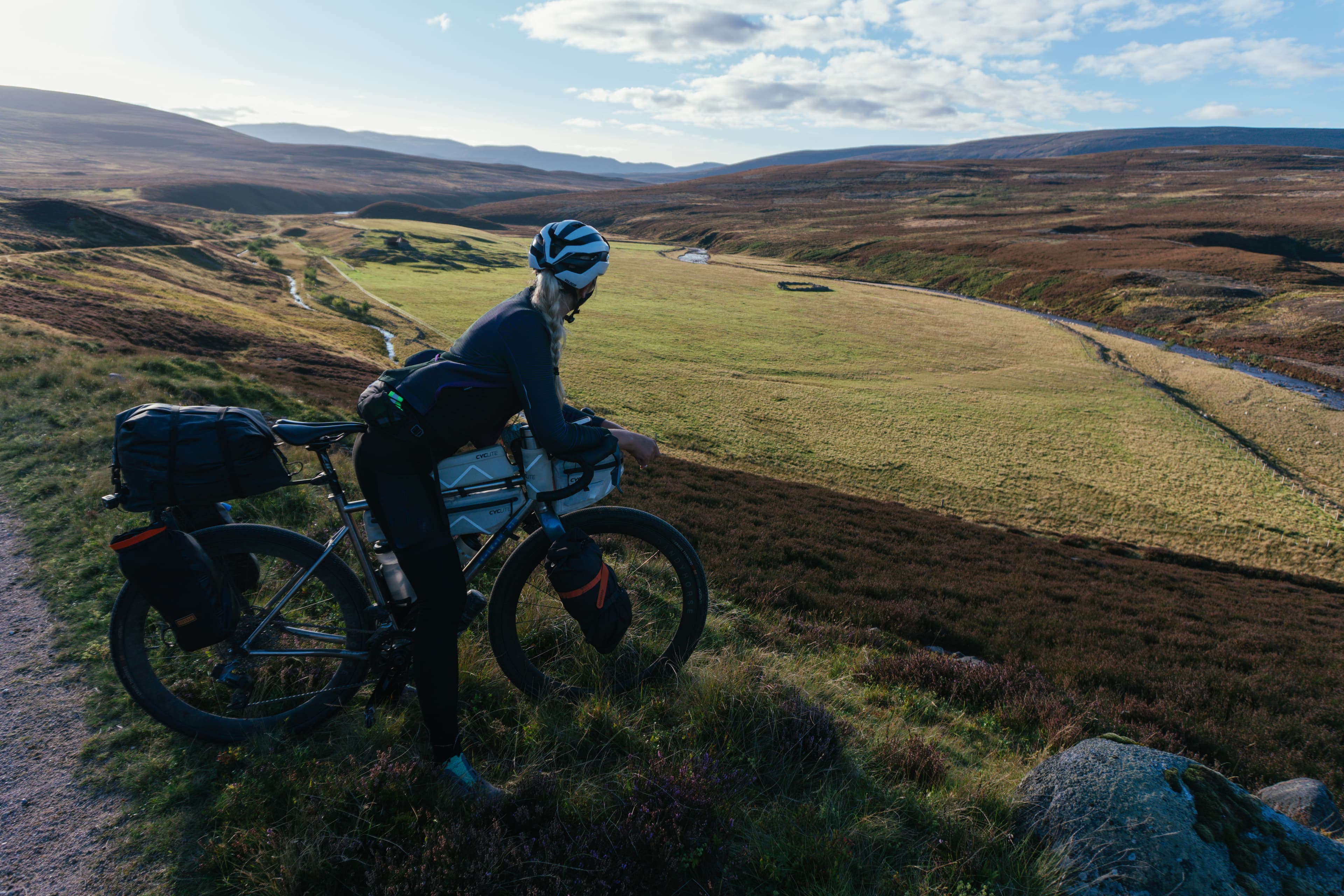
Modern 1x drivetrains have such a wide gear range that, when it comes to bikepacking, they often have more going for them. For me, simplicity and the lightest gear ratio available are what matter most.
When I’m riding with gear off-road and in the mountains, a large cassette is something I really appreciate. On a steep climb after riding for several dozen kilometers, I’m definitely more interested in being able to shift into a very light gear than in the number of chainrings on the crankset.
However, if bikepacking mainly involves paved roads, good surfaces, and long stretches ridden at a steady pace, a 2x setup might be a better alternative. So, once again, it’s not the luggage that decides—it’s the route.
What about ultra? That’s where things get interesting
The TransPyrenees is a good example for me. About 1,100 km and 28,000 meters of elevation gain, so you might automatically think: mountains, ultra—I need a big 1x cassette.
I chose 2x.
Why? About 95% of the route was on asphalt. I spent many hours on the bike, and being able to maintain a proper cadence was very important to me. In this scenario, the closer gear spacing of a 2x setup offered a real advantage.
But it wasn’t perfect. On really long and steep climbs, I missed having a low gear and the range you can get with a large MTB cassette.
And that’s probably the best example of why I don’t like the answers “1x is better” or “2x is more versatile.” Every choice has its pros and cons.
What about the weight?
Yes, a 1x drivetrain might be a bit lighter, since we’re getting rid of the front derailleur, the second chainring, and some additional components. But when choosing a gravel drivetrain, I consider that a secondary consideration.
If I have to choose between a few grams less and the gear ratio I’ll need on the 20th kilometer of a mountain climb, the choice is pretty simple for me.
1x and 2x on Different Gravel Bikes
Not every gravel bike needs the same drivetrain. The bike’s character often dictates the configuration.
With the GRAIN and LIFT, we have a lot of flexibility and very often use various 1x setups. The DISCOVER works great with both 1x and 2x—here, a lot depends on what its owner wants to do with it. The RANGE and SHIFT naturally lean more toward 2x, as they’re closer to fast road riding. The HARDY is on the other end of the spectrum—here, I definitely see a 1x setup with a large cassette and an MTB derailleur.
This clearly illustrates why you shouldn’t choose a drivetrain in isolation from the bike as a whole. The same system that works great on a monster gravel bike won’t necessarily be my first choice for a fast all-road bike.
1x or 2x—so which should you choose?
If most of your riding involves gravel, forests, off-road trails, mountains, or bikepacking—I’d start by exploring the 1x option. Don’t assume right away that you’ll lack gear range. With a well-chosen cassette and chainring, the opposite will most likely be true.
On the other hand, if you ride a lot on pavement, train, ride fast, care about maintaining a precise cadence, or are building a gravel bike that’s very close to an all-road bike—then 2x makes a lot of sense.
A well-chosen drivetrain should stop drawing attention to itself after a while. You won’t be wondering how many chainrings you have or what percentage of the range the cassette offers. You’ll simply have the right gear ratio at the right moment.
And if I had to answer in one sentence?
Let’s make life easier for ourselves—for most gravel applications, a well-chosen 1x drivetrain is a truly great solution today.
Cheers!
Sebastian Golczak | Koloride Cycling

FAQ - 1x / 2x Drive
Does a 1x drivetrain have a narrower range than a 2x drivetrain?
Not
necessarily. Modern 1x setups, especially those using a large MTB cassette, can offer a very wide range. You’ll notice the difference more in the larger gaps between gears than in the range itself.
Is a 1x drivetrain suitable for mountain biking?
Yes. A properly selected front chainring and a large cassette can provide very light gear ratios. In the mountains, especially when carrying luggage, this can be one of the biggest advantages of a 1x setup.
Is 1x suitable for bikepacking?
Yes. For off-road and mountain bikepacking, I’d personally choose a 1x setup with a wide range. For trips mainly on paved roads, a 2x setup might have the edge.
When is 2x the better choice?
First and foremost, when you ride a lot on paved roads, prioritize high speeds, and want to maintain a precise cadence. The smaller differences between gears are a real advantage in this case.
Is 1x better for a beginner?
I
wouldn’t choose a drivetrain based solely on a cyclist’s experience. The routes and riding style are more important. The simplicity of a 1x system can be an advantage for a beginner, but it’s not the only factor to consider when making a choice.