Buying a gravel bike often starts with one question: How much do I want to spend? That’s natural. But your budget won’t answer the more important question: Which bike will suit my riding style?
Two gravel bikes at the same price can be designed for completely different purposes: racing, ultra-distance rides, bikepacking, or everyday riding. That’s why price shouldn’t be the first factor in your decision.
That’s why at Koloride, we don’t start conversations about a new bike by talking about the drivetrain or frame material. First, we ask: what will this bike be used for?
Is this your first gravel bike? What do you ride now? How often do you ride? Are you planning to go bikepacking? Are you looking primarily for comfort, or do you also want to race? Do you live in the mountains or on flat terrain? And finally: how much of your riding will actually be off-road, and how much will be on asphalt, bike paths, and paved roads?
Only then is it time to consider specific options and your budget. A well-chosen gravel bike isn’t necessarily the most expensive one. It’s the one that fits how you actually ride.


Start with your routes, not your bike
It seems obvious, but this is exactly where it’s easy to make a mistake. You might buy a bike for your dream trip to the Alps, even though you spend 90% of the season riding on flat trails around your home. You might also choose a very sporty setup because it looks great and weighs half a kilogram less, only to later discover that what you enjoy most are all-day rides where comfort is more important than shaving off a few more grams.
People who are switching from MTBs come to Koloride, looking for something lighter and more versatile. There are travelers planning bikepacking trips, recreational riders, but also experienced cyclists who know exactly what they want and need help building a bike to meet specific requirements.
So before you start choosing a model, frame material, or drivetrain, ask yourself a few questions:
Where will I actually be riding?
How long are my typical rides?
What’s more important to me: speed, comfort, or versatility?
Do I plan to go bikepacking, do ultra rides, or compete in races?
What’s missing from the bike I’m riding now?
This is a much better starting point than a price list.
A fast gravel bike doesn’t always mean a sporty machine
If you’re looking for a dynamic ride, factors like geometry, frame stiffness, weight, wheels, tires, and riding position start to matter. But the phrase “I want a fast gravel bike” still doesn’t tell us much.
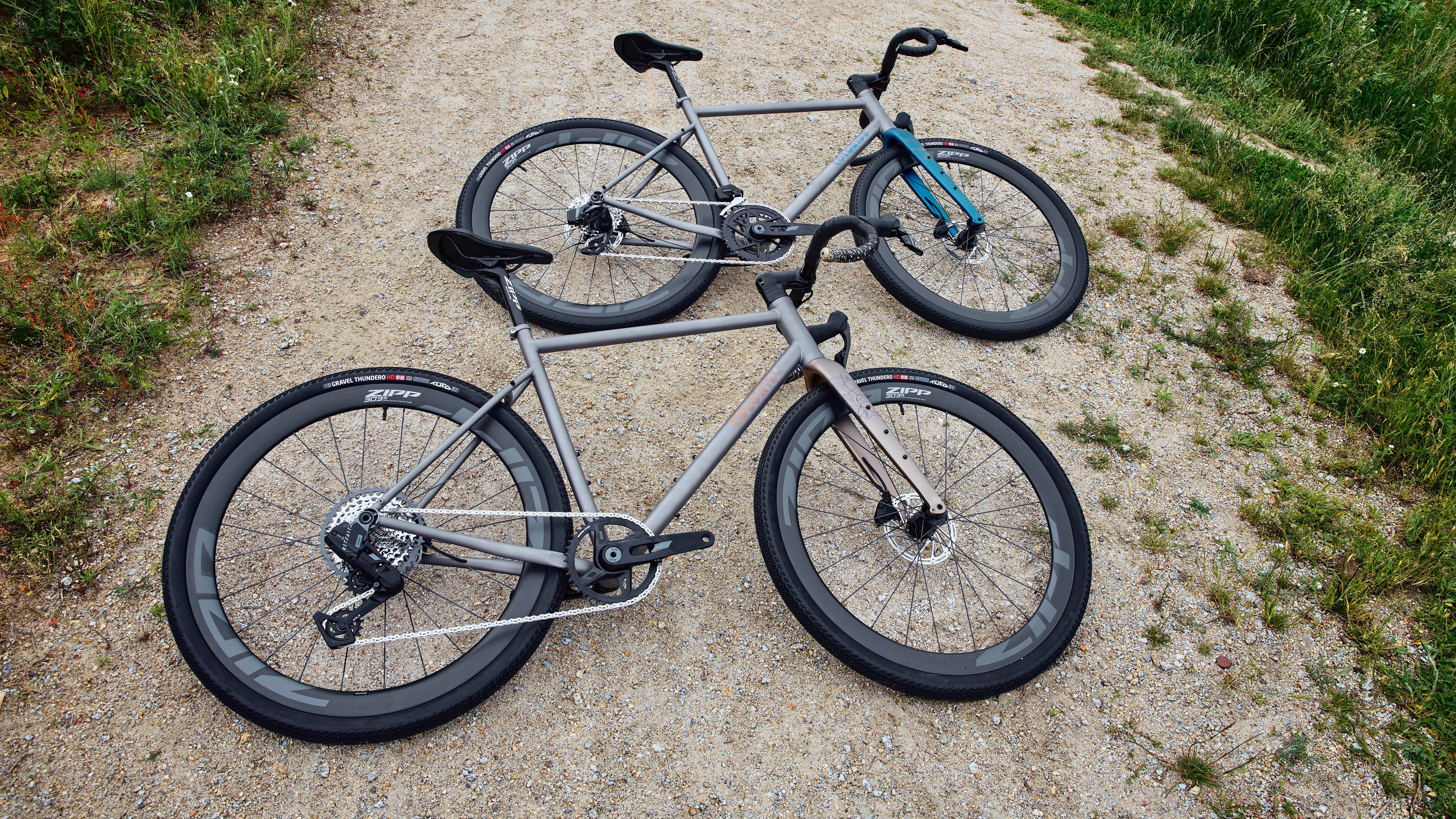
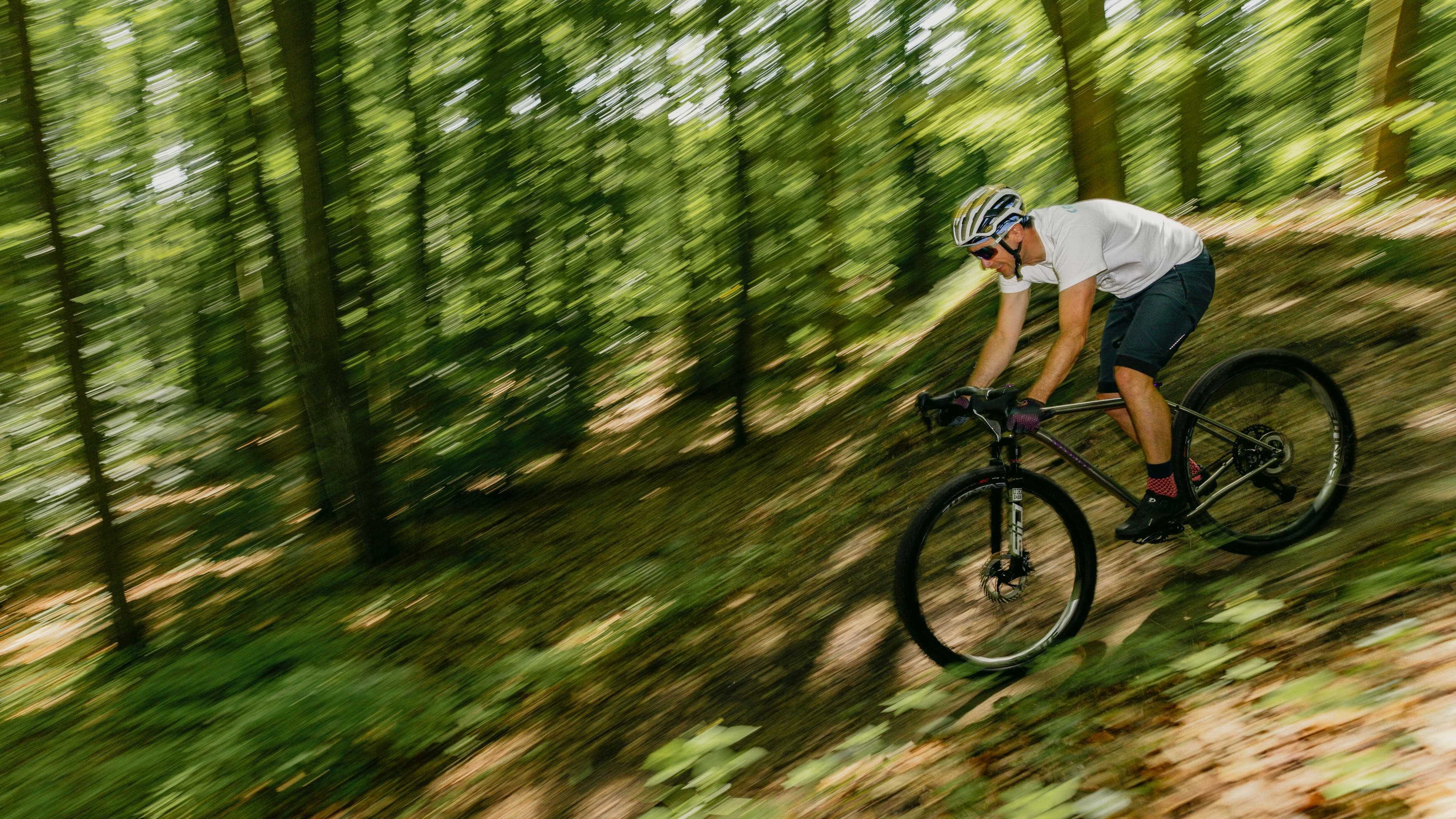
After all, the same model can be configured in two completely different ways. Our carbon LIFT CF can be a lightweight, stiff bike for someone counting every gram, but when built right, it can also become a comfortable gravel bike for recreational riding. We also often build the DISCOVER Ti as a fast machine for gravel races.
This illustrates a more important principle: a bike’s character isn’t determined by a single parameter or the label on the frame.
Geometry defines a bike’s character, but the wheels, tires, gear ratios, and riding position can significantly change the way the same bike rides.
And one more thing. If someone says they’re looking for a fast gravel bike, but it’s clear from the conversation that they’ll be riding almost exclusively on asphalt and well-maintained gravel roads, it’s worth considering whether they actually need a gravel bike. Sometimes the right choice is an all-road bike like the RANGE Ti or SHIFT Cf.
In the long run, the little things stop being the most important
After an hour of riding, many bikes seem comfortable. After eight, ten, or twelve hours, the details start to show. Let’s start with the most obvious thing: the right frame size. Next comes a well-adjusted riding position—from the saddle to the handlebars—and gear ratios suited to the route.
Over long distances, even things that are easy to ignore on a short ride become important. The quality of the handlebar tape. Extra gel pads under the handlebars. The amount of luggage, the number of mounting points, and above all, their sensible placement.
This experience from long rides really helps you prioritize things well.
After ten hours of riding, a difference of a few hundred grams in the bike’s weight hardly crosses your mind anymore. A poorly chosen gear ratio, riding position, or sore hands—definitely not.
That’s why, when setting up a bike for long distances, first make sure of:
the right size and position,
an appropriate gear range,
comfortable contact with the bike—saddle, handlebars, and bar tape,
tires suited to the road surface,
a practical way to carry luggage.
Only then is it worth striving to shave off a few more grams.
“I want to ride for a long time” isn’t enough either
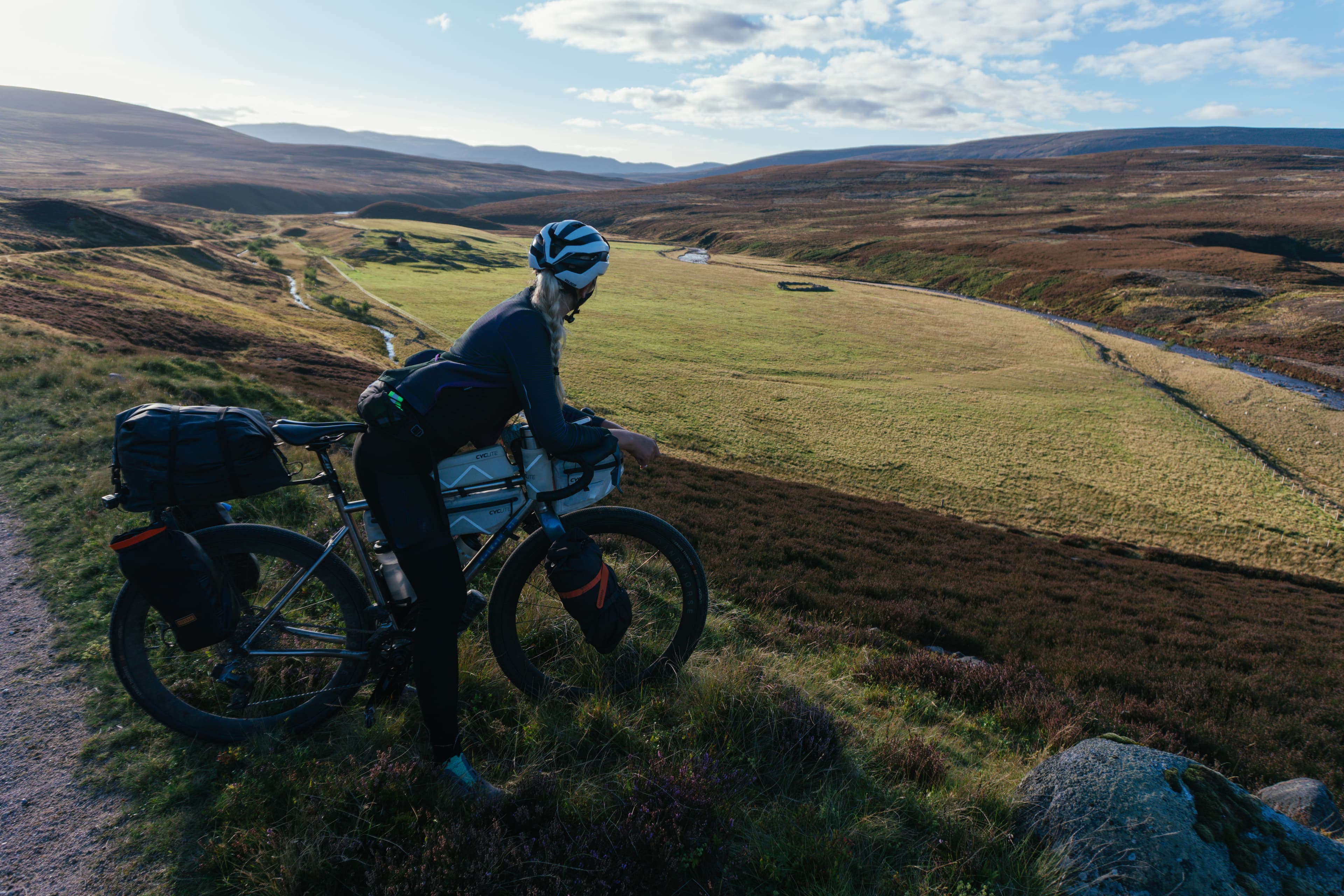
A long distance could mean 200 kilometers of fast riding on asphalt. It could mean a gravel ultra. It could also mean a week of bikepacking with luggage.
Each of these scenarios requires a slightly different bike.
This is clearly evident in our own designs. We build the GRAIN Ti as a bike for multi-day bikepacking, everyday riding, and much faster setups. Sebastian describes the RANGE Ti as “the king of road distance”—fast, yet still comfortable. The DISCOVER Ti is designed both as a bike for gravel races and as a machine for multi-day expeditions.
This isn’t about a model overview, but rather a simple principle:
there’s no such thing as a one-size-fits-all long-distance gravel bike.
First, we need to clarify: long—but where? How fast? With what kind of luggage? On what kind of terrain?


What if I want one gravel bike to do it all?
That’s one of the most common goals, and it’s not a bad one at all. As we know, a gravel bike can be one bike for everyday riding, gravel trails, weekend trips, and vacation bikepacking. You just have to accept that versatility means some compromise. If a bike is meant to do many things, it’s more important to have a comfortable—but not sluggish—geometry, adequate tire clearance, the ability to mount luggage, and a configuration that can be adjusted over time.
Good examples from our own lineup are the KRASKA AL and the GRAIN Ti. We recommend the KRASKA as a good, versatile first gravel bike—comfortable and with plenty of mounting points. The GRAIN is more dynamic, but it’s still a bike that can be built in many different ways.
And this is where wheels, tires, and gear ratios can change the character of the bike much more than you might think.
So there’s no need to build a bike that’s “perfect for everything.” It’s better to define what it should excel at and what it should simply handle well.
Aluminum, carbon, or titanium? Don’t start with the material
The question “aluminum, carbon, or titanium?” comes up very often. But the frame material is just one piece of the puzzle.
Aluminum allows you to build a durable and versatile bike on a reasonable budget. Carbon offers great possibilities in terms of weight, stiffness, and design, which is why it also works great in performance-oriented setups. We value titanium for its comfort, durability, corrosion resistance, and the ability to build a bike that will last for many years.
However, we don’t view this as a hierarchy:
aluminum → carbon → titanium.
A more expensive material doesn’t automatically mean a better bike. If you have a specific budget, what matters far more is how that budget is utilized across the entire configuration.
What's worth spending more on when it comes to gravel bikes?
And that brings us to the price.
The question shouldn’t just be, “How much does a good gravel bike cost?” but also, “What’s worth paying extra for to really feel the difference?”
Wheels
Wheels are one of the components that have a major impact on a bike’s character, though they’re also among the easiest to replace down the road. Wide carbon rims paired with tubeless tires allow you to run lower tire pressure, which provides more comfort and traction on rough terrain. Lighter wheels also mean lower rotating mass—making it easier to get the bike up to speed. Does this mean everyone should buy carbon wheels right away? No. If your budget is limited, you can replace the wheels later, but they are the most important component of a well-thought-out setup.
Drivetrain
Here, we can often cut corners. Good entry-level drivetrains perform at a very high level these days, and the price difference between them and the top-tier groupsets doesn’t always match the difference you’ll feel while riding. Choosing the right gear range is much more important. If you’re riding in the mountains with luggage, a lower gear ratio can be worth far more than the few grams you save on a derailleur.
Tires
Here, it’s not worth basing your decision solely on price. Good tires cost about the same, yet they have a huge impact on traction, comfort, speed, and handling confidence. The most important thing, then, is to match them to the terrain you’ll actually be riding on most often.
Saddle and Riding Position
The most expensive saddle isn’t automatically the most comfortable. Saddles are a topic for a separate article. It must provide good support for the sit bones, be the right length, and have your preferred finish—a very personal matter and very difficult to choose.
Fit is more important than price.
The same goes for the entire bike. Bike fitting is very helpful when building a new setup, especially if you plan to spend many hours in the saddle. We also strongly recommend pre-fitting or bike sizing—it saves a lot of money when replacing components.
What about electronic shifting?
This is a common question: is it worth paying extra for electronic shifting? It’s not necessary. But people who try electronic shifting rarely go back to thinking that mechanical derailleurs are completely sufficient. ;) Smoothness, response time... . And I think we can leave it at that.


So how can you make the most of your gravel budget?
Don’t spread your spending evenly.
The most expensive drivetrain, carbon wheels, and the lightest components can make for a great bike. But only if they meet your needs.
If you’re on a tight budget, start by making sure you have the right frame and size, proper riding position, suitable gear ratios, and good tires. Then think about which components will actually improve your riding experience.
For one person, it might be the wheels. For another, it might be the electronics. For someone planning an ultra-distance ride, gear ratios, handlebar comfort, and the ability to mount luggage might be more important.
It’s not about building the most expensive gravel bike you can afford. It’s about not spending money on things you don’t need.
Riding style first, budget second
If you have 20 open tabs with bikes in front of you, you could spend the next few evenings comparing groupsets, weight, wheels, and prices. But will that make the choice any easier?
Instead of comparing one spec sheet after another, start with your needs. And if you’re having trouble translating those needs into specific geometry, drivetrain, wheels, or tires—build your bike with people who can tailor those components to you and your riding style. That way, there’s a much better chance that a year from now, you’ll still be planning your next rides instead of looking for another bike.
First, think about where, how, and why you ride. Then choose a bike. Finally, spend your money. Not the other way around.
FAQ – How to Choose a Gravel Bike Based on Your Riding Style?
Which gravel bike should you choose for riding on asphalt and gravel?
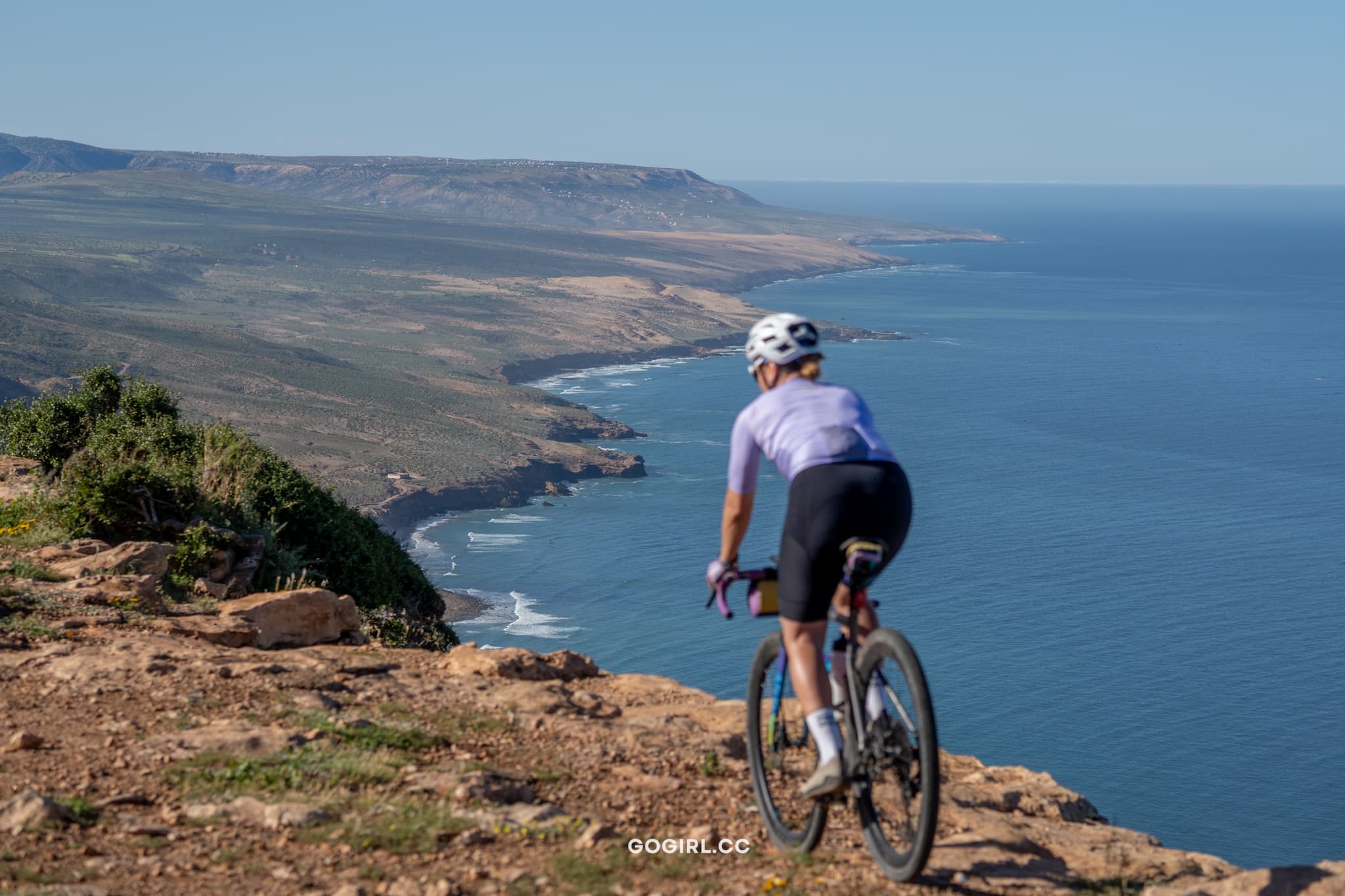
Start with the proportions. If you cover most of your kilometers on asphalt and gravel is just an add-on, it’s worth looking at a fast gravel bike or an all-road bike. The more you ride off-road, the more important tire width, stability, ground clearance, and geometry adapted to rougher terrain become.
Which gravel bike should you choose for bikepacking and long distances?
First and foremost, a well-fitted bike. The right size and position, appropriate gear ratios, a comfortable riding position, and the ability to distribute your gear sensibly will be more important than striving for the lightest weight possible.
What’s worth spending extra on when buying a gravel bike?
On features that actually change the way you ride. Good tires, a proper fit, and appropriate gear ratios are more important than choosing the highest-end drivetrain. Wheels can significantly improve a bike’s handling, but they’re also one of the easiest components to replace later on.
Is it worth buying the most expensive drivetrain your budget allows?
Don’t splurge on the top-tier groupset at the expense of good tires or the right gear ratios. Basic modern groupsets work very well, and on a steep climb, you’ll appreciate the right cassette more than the logo of a more expensive groupset.
Aluminum, carbon, or titanium—which should you choose for a gravel bike?
For a versatile gravel bike, you don’t need titanium or carbon—well-designed aluminum is more than enough. We choose carbon primarily when we’re looking for low weight and a sporty ride. Titanium makes the most sense when comfort, durability, and a bike that will last for many years are the priorities.
Stay tuned!
Sebastian