
In gravel cycling, it’s easy to focus solely on the components, weight, or trendy technical features. However, one of the most important decisions remains the choice of frame material. It is this material that largely determines the bike’s character, how it absorbs bumps, how it feels during long rides, and its future customization options.
However, there is no single material that is “best for everyone.” A well-chosen gravel bike should match how you actually ride—whether the bike is meant to be an everyday companion, gear for multi-day trips, a fast all-road bike, or perhaps a low-maintenance machine for regular use.
Aluminum – Versatility and Everyday Practicality
Modern aluminum has long ceased to be a material associated exclusively with basic bicycles. A well-designed aluminum frame can be lightweight, dynamic, and highly versatile. This is especially true when, as at Koloride, we work with 7020 alloy.
In gravel riding, aluminum works particularly well for people who:
ride regularly on various surfaces,
are looking for one bike for many uses,
want to combine asphalt, gravel, and everyday use,
value simplicity and functionality.
Aluminum frames often offer a more responsive ride—they react more quickly to acceleration and perform well during dynamic riding on varied routes.
KRASKA AL-Koloride – a versatile gravel bike made from 7020 aluminum alloy
At Koloride, this direction is embodied by the KRASKA AL-Koloride—a gravel bike built around the idea of versatility. It’s a bike that performs equally well for daily commutes, weekend rides, light bikepacking, or longer off-road trips. Thanks to its wide range of configuration options, the KRASKA can have a sportier character or become a practical utility bike—including in configurations with the Gates Carbon Drive belt drive.


Titanium – comfort and durability for years to come
Titanium is most often chosen for gravel bikes by people who spend a lot of time on their bikes and are looking for a frame built to last for years.
It is a corrosion-resistant material, highly durable, and exceptionally effective at dampening minor vibrations. This is particularly appreciated during long rides on gravel, uneven asphalt, or trails with extra luggage.
Titanium gravel bikes are often chosen by people planning:
long trips,
ultra-distance rides,
regular bikepacking,
year-round riding,
intensive use over many seasons.
At the same time, titanium in Koloride doesn’t mean just one type of bike. Depending on the geometry and configuration, it can become:
a classic expedition gravel bike,
a fast all-road bike,
a maintenance-free belt-driven bike,
or a frame designed for rough terrain and heavy loads.
One material, many different personalities
What is often overlooked when choosing a bike is the fact that the material alone does not define the entire character of a gravel bike. The following factors are also of great importance:
geometry,
chainstay length,
tire width,
wheels,
drivetrain,
driving position,
intended use of the entire design.
That is why two bikes made from the same material can handle completely differently. Within the Ti-Koloride family, each model addresses different needs:
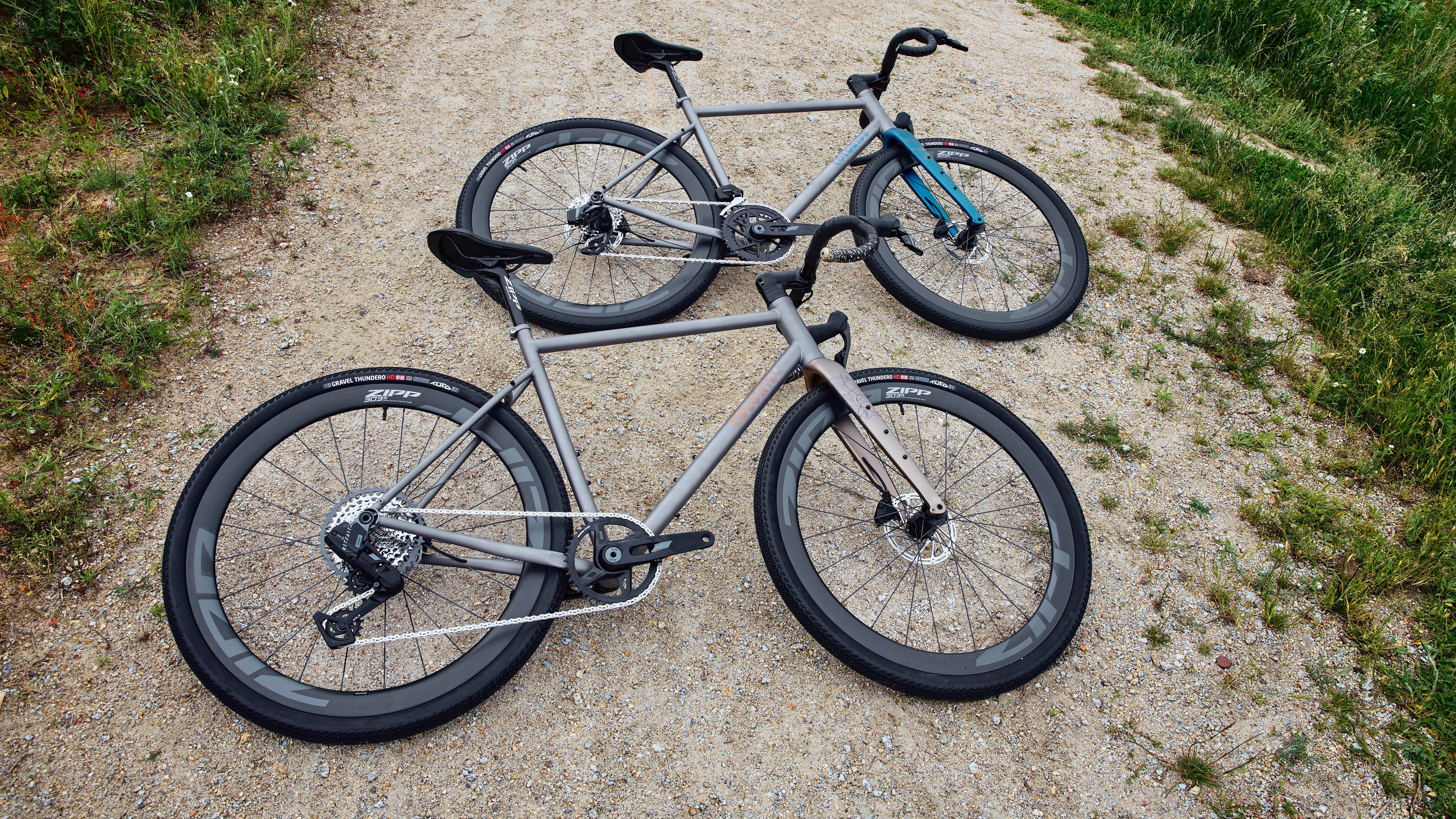
The DISCOVER Ti-Koloride was designed with long distances and modern solutions in mind, utilizing components made with 3D printing technology,
GRAIN Ti-Koloride is a more classic gravel bike focused on comfort and versatility,
LOOP Ti-Koloride expands on the idea of a maintenance-free gravel bike with a Gates Carbon Drive,
HARDY Ti-Koloride is geared toward expeditions and rougher terrain,
RANGE Ti-Koloride is closer to a fast all-road bike than a classic expedition gravel bike.


Is titanium a better choice?
Not necessarily. For many people, a well-configured aluminum gravel bike will be a more sensible and versatile choice than a more expensive titanium frame. On the other hand, there are cyclists who, after a few years of regular riding, start looking for greater comfort, a different character of the bike, or a platform designed for a lifetime of use—and then naturally gravitate toward titanium. The most important thing, however, is that the material matches your actual riding style—not the current trend.
A good gravel bike starts with the right questions
When choosing a bike, it’s worth considering:
where you ride most often,
how long your rides are,
whether you plan to go bikepacking,
how important ease of maintenance is to you,
whether the bike should be more sporty or more practical,
and whether you’re looking for a single “all-purpose” bike or a specific tool for a particular riding style.
Only then does the choice between aluminum and titanium start to make real sense. In practice, it’s not about which material is better. It’s about which one will better suit the way you actually ride.